When I started out in the mountains I couldn't find anything in Spanish about boots: nobody said what they actually used or why. So here's my real experience with the three boots I own, when I use each one and how to choose yours without overspending.
Watch on YouTube · youtube.com/@joehard982
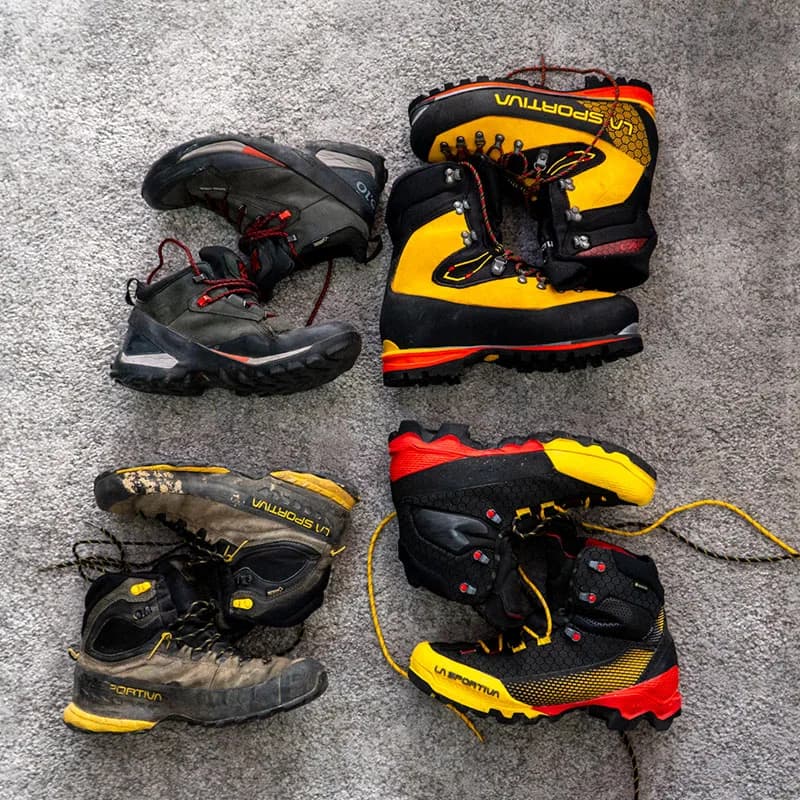
Three boots, one for each terrain
There's no single boot that does everything well. I've ended up with three levels of stiffness, one for each terrain and season. If you had to keep just one to start, it would be the first.
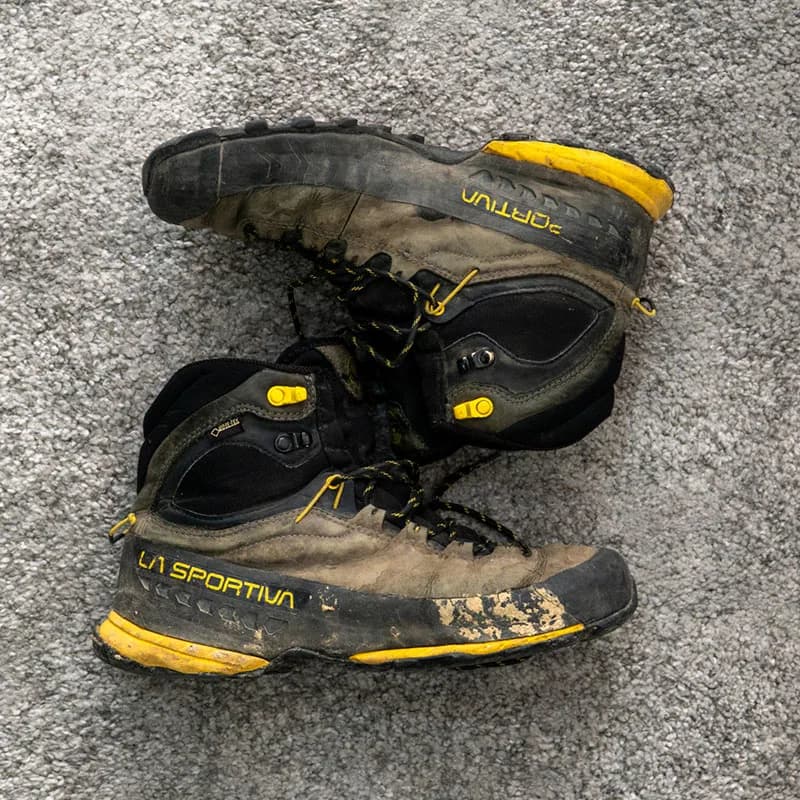
1. The soft all-rounder: La Sportiva TX5 GTX
They were my first proper boots; before that I just used trail shoes. They've been with me three years and I've done absolutely everything in them: Picos de Europa, the Alta Ruta, Peñalara, Pico del Lobo, 100 km traverses. Across the last few big routes I've put 200-300 km on them. They're soft but very well protected: that leather band around them takes the abrasion of rocky ground and stops them tearing. They look new after three hard years. The only downside: they have Gore-Tex, so in summer your feet get really hot. You don't suffer, but you notice it. I still use them.
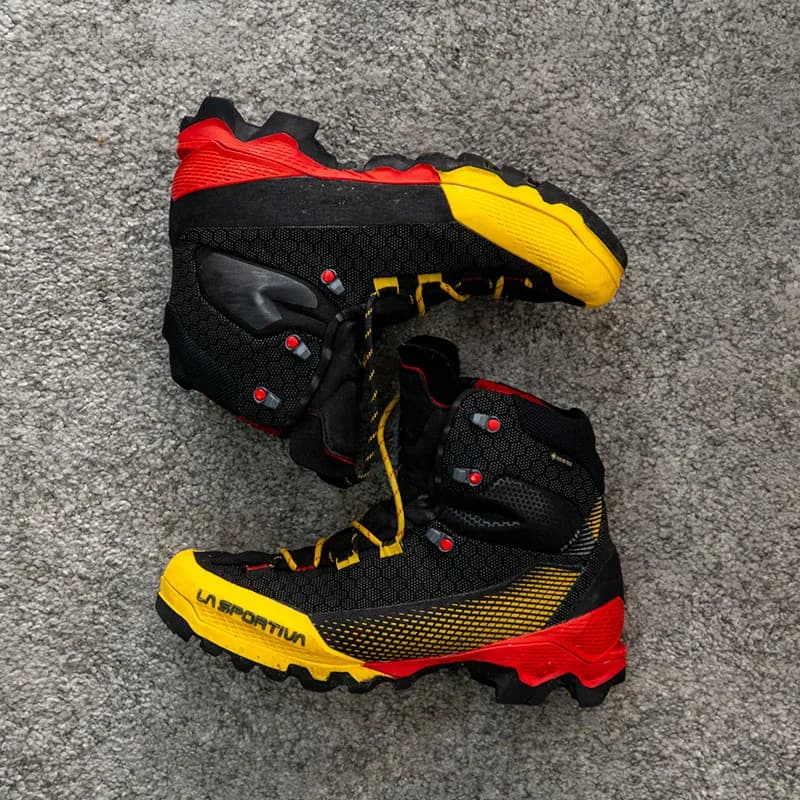
2. The semi-rigid for most of the year: La Sportiva Aequilibrium
One of my latest additions. I spent three years doing everything in the TX5, but I wanted something with more bite for winter, spring and autumn, especially here in Madrid, where we don't have hard winter conditions all the time and a rigid boot isn't always worth it. The Aequilibrium takes a semi-automatic crampon, it's light, comfy and warm; it's also not leather (I wanted to try something different) and the toe is fairly rigid for abrasion on rocky terrain. I've been putting it through its paces for a couple of months and I'm delighted; some people use it in the Alps for light alpinism and ice climbing.
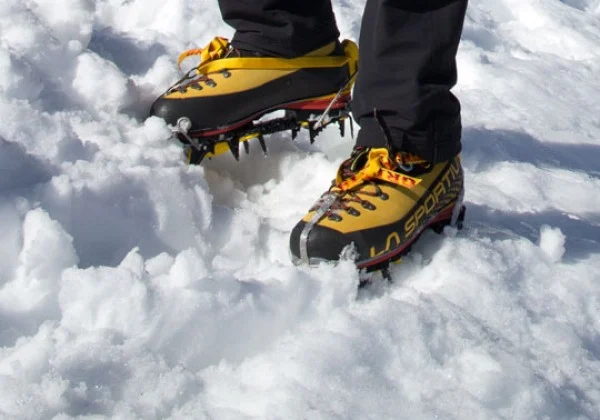
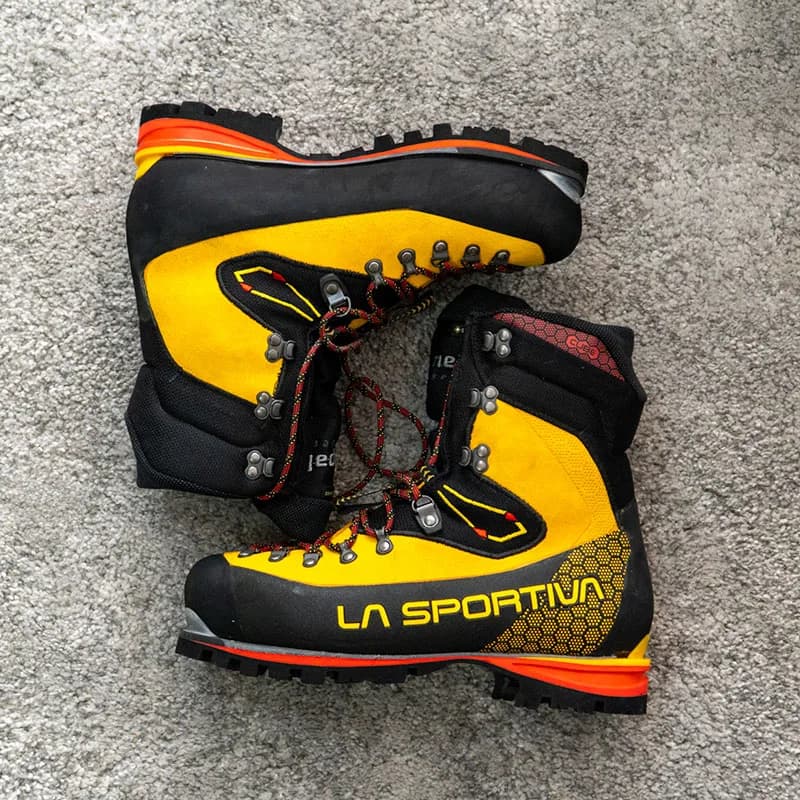
3. The rigid one for real winter: La Sportiva Nepal
These are for the serious days: pure winter alpinism, ice, 4,000 m peaks. They're not for a 7,000 or 8,000 (that's a different boot), but for the Alps and high-altitude adventures they're perfect. They take automatic crampons, they're surprisingly light for what they are and genuinely warm: I haven't felt any cold. In the Pyrenees and on Peñalara in snow and strong wind they've handled it like it was nothing.
How to choose (without overspending)
The rule is simple: buy the boot for the terrain you actually walk, not for the photo. If you're starting out and do routes and trekking, a soft boot like the TX5 is plenty and will last years. If you add winter and want an occasional crampon, a semi-rigid like the Aequilibrium. And only if you do real winter alpinism does a rigid boot like the Nepal make sense. Going stiffer than you need means overspending and walking uncomfortably. And watch out for Gore-Tex: it keeps you dry and warm, but in summer it takes its toll. That's the trade-off of almost any waterproof boot.
You've got the video above to see the three boots in hand and on the trail; it makes much more sense seeing them. If it helped and you'd like me to keep making honest gear breakdowns (there's barely any in Spanish), subscribing to the channel is the best way to keep them coming. And a wink: if you made it this far you're in the 1% who reads everything; drop a boot and a backpack 🥾🎒 in the video comments and you'll make my day.
The gear in this video
What I carried and that actually earned its place. Affiliate links.
Boots
Accessories
Photo & video
Some links are affiliate links (Amazon and Decathlon): if you buy through them I earn a small commission at no extra cost to you. As an Amazon Associate I earn from qualifying purchases. I only recommend gear I actually use.